The story is based on the life of Vishvamitra, who is one of the most venerated sages of ancient times in India. At last, Vishwamitra penance power reaches to heights of Himalayas where he utilizes it to the welfare of the universe by preaching great Gayatri Mantra and the movie ends Vishwamitra becoming one among the stars of the universe at Saptarishi Mandalam.
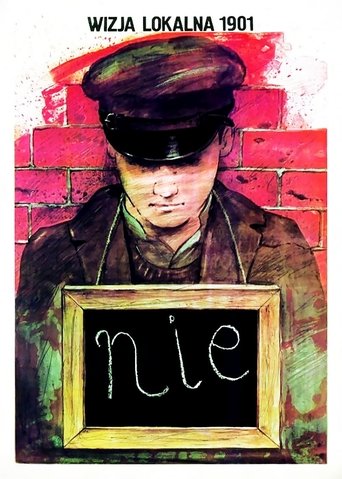
More documentary in its approach than dramatized history, this is a compelling story about a 1901 children's strike in Wrzesnia near the Polish border with Prussia. Poland was partitioned at this time, and a rigidly patriotic Prussian teacher in Wrzesnia follows the dictates of the Germans in parliament and insists that the children be taught their religion classes in German. When the children refuse to take part in the classes, they are supported by the local priest, but that does not save them from being beaten. They are also kept after school and tormented in other ways as well. Newspapers, parents, and the nation as a whole get involved, transforming a simple children's strike into a national incident.
In post–WWII Italy, inspired industrialist Adriano Olivetti oversees the creation of the first all-Italian electronic calculator while theorizing a revolutionary business model based on the idea that profit should be reinvested for the benefits of the whole society. An utopian vision that catches the attention of powerful interests...
Japan's Imperial system is said to have over 2,000 years of history. A closer look at the history reveals how the Imperial institution has shifted with the times, and with the people. At a time when there are only three heirs to the throne, a look is taken at what this could mean for the people of Japan and their Imperial system.
Giorgio Capitani reconstructs in the Rai TV film the parable of the famous entrepreneur, in a product that in technical terms does not escape the logic of television, but still manages to offer an interesting picture of a key figure of postwar Italy.
Sixth film in the long-running series Daiei Studio's Woman Gambler with Kyoko Enami starring where she plays the woman gambler Ogin.
The 1939 dramatic short "Angel of Mercy," about Red Cross founder Clara Barton, is reedited to relate the story to America's involvement in World War II. Edited from Angel of Mercy (1939)
In 1919 an art school opened in Germany that would change the world forever. It was called the Bauhaus. A century later, its radical thinking still shapes our lives today. Bauhaus 100 is the story of Walter Gropius, architect and founder of the Bauhaus, and the teachers and students he gathered to form this influential school. Traumatised by his experiences during the Great War, and determined that technology should never again be used for destruction, Gropius decided to reinvent the way art and design were taught. At the Bauhaus, all the disciplines would come together to create the buildings of the future, and define a new way of living in the modern world.
Part journalistic investigation and part performance documentary, "Who Killed The Federal Theater?" tells the story of the Federal Theatre Project within the context of a volatile period in the political, social and cultural history of the United States. The film features interview segments with playwrights, including Arthur Miller, and with actors, directors, designers, and historians. It also incorporates rare archival materials and dramatic sequences, including professionally re-created scenes from Federal Theatre productions that transport viewers back in time to a bygone era in American history and entertainment.
On the participation of the intelligentsia in the revolution and post-revolutionary transformations of the Soviet country.
It is a historical drama that follows Katsu Kaishu's efforts to surrender Edo Castle bloodlessly in the first year of the Meiji period.
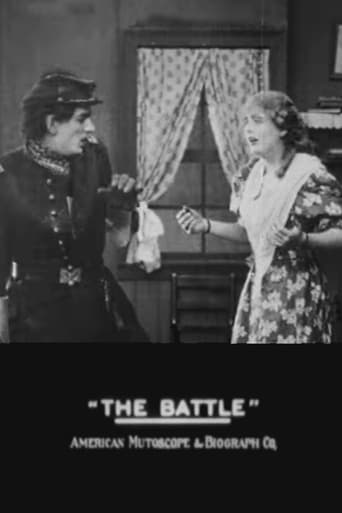
Union soldiers march off to battle amid cheering crowds. After the battle turns against the Union Army, one soldier runs away, hiding in his girlfriend's house. Ashamed of his cowardice, he finds his courage and crosses enemy lines to bring help to his trapped comrades.
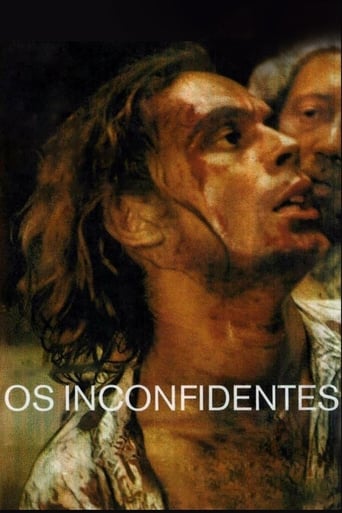
The real story of the failed attempt of an independence coup by a group of intellectuals and rich men during Brazil's colonial days, from its beginning to the execution of Tiradentes.
Paris, May 1931. Black culture is in vogue at the same time that a great colonial exhibition displays the peoples of the world subjugated by the French Empire. It is then that a group of researchers travels to Africa and undertakes an ambitious ethnographic mission. On their way from Dakar to Djibouti, they collect a large number of objects destined for the Musée de l'Homme. Is it a well-intended adventure or a great plunder?
Atilla the Hun gives a Silver Saddle to Altar as a gift. The intention of Kostok is the get rid of the Huns and seize the valuable saddle. Little Tarkan's foster mother is forced to leave him in a cave. His cry attracts the attention of a wolf, who raises Tarkan like his own cub.
Kingdom of Castile, the late fifteenth century. The film chronicles the events that Cristóbal Colón lived (Antonio Vilar) from their stay in the Convent of La Rabida, his meeting with the Catholic Monarchs and, above all, the great odyssey that led to cross the Atlantic and reach the shores of America (1492), thus beginning a new era in the history of mankind.
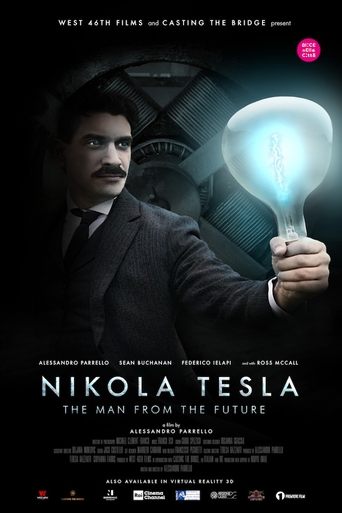
New York, May 16, 1888. Visionary Serbian inventor Nikola Tesla is about to introduce an innovative AC asynchronous motor. Before the demonstration, wealthy businessman George Westinghouse meets Tesla privately to get him to sell him his patent and go into business with him. Tesla declines the offer but during the demonstration something happens that will change the world forever.
The musically highly gifted maid Elsie, who longs for a career as a musician, is forced into marriage with Jacob, a young stable boy who dreams of owning his own horse. Both have to learn that they can only escape their lack of opportunities if they team up.
Activate Your Account!
You must create an account to continue watching